
- WHY USE THE MDI -
Lorem ipsum dolor sit amet, consectetur adipiscing elit, sed do eiusmod tempor incididunt ut labore et dolore magna aliqua. Ut enim ad minim veniam, quis nostrud exercitation ullamco laboris nisi ut aliquip ex ea commodo consequat. Duis aute irure dolor in reprehenderit in voluptate velit esse cillum dolore eu fugiat nulla pariatur. Excepteur sint occaecat cupidatat non proident, sunt in culpa qui officia deserunt mollit anim id est laborum.

The creation of the Middle Years Development Instrument (MDI) began in 2006 through a unique collaborative process. Drawing from the most recent science from the fields of resilience, positive youth development, positive psychology, and middle child development, a team at the University of British Columbia (UBC), led by Dr. Kimberly Schonert-Reichl, worked with scientific experts, community members, educators, and children to create and test the first questionnaire. You can read more about the pilot study (link to UWLM 2011 Report) that led to the MDI and see the current questionnaire in full.
The MDI is a population-level questionnaire. This means that although individual children complete the questionnaire, the results are not used to evaluate or assess individual children, and the results from the MDI are not used to rank teachers, neighbourhoods, schools, or school districts. As a population-level questionnaire, the data gathered from the MDI can be used by educators, community organizations, health authorities, and policymakers to improve the health and well-being of groups of children. The MDI data also are used by researchers who wish to identify the factors that contribute to resilience and well-being in middle childhood.
The value of MDI data lies not in assessing the strengths and needs of one child, but in seeing patterns across an entire school, community, or school system as well as across time for groups of children during middle childhood. MDI data also can play an important role in supporting efforts to reduce inequity and improve well-being for the children in your school system or community by shining a light on similarities and differences in children’s well-being and the distribution of assets throughout a school system or community.
The questions on the MDI are designed to ask children to reflect on the positive aspects of their lives and provide them with the opportunity to share these reflections with adults. Because many children are not often asked about their own lives inside and outside of the school, the MDI is often the first time children are given the opportunity to voice their experiences. MDI data can provide important information to schools and communities about their strengths and provide a catalyst for dialogue and positive action to improve the well-being and assets of children during the middle years.
The MDI should not be used as a rating tool. Instead, the MDI data can be used as a way to reflect on both the strengths and challenges that children experience. It is important to first recognize what strengths are present and work to address the challenges children face as opportunities to build capacity that will lead to positive changes for them across school, home and community environments.

It is important to remember that children’s social and emotional competencies and skills are malleable — they can be learned and strengthened during middle childhood. This is especially true of social and emotional skills and positive relationships with peers and adults at school, home, and the community. Recent research has outlined programs and practices that target these skills and has shown that strong social and emotional competencies and positive relationships predicts children’s positive short and long-term outcomes. Middle childhood is an important time in children’s development to provide them with opportunities to develop and practice positive social and emotional skills, behaviours, and healthy lifestyles.
Research also has shown that the assets that support children’s well-being during the middle years are actionable — which means that the adults in children’s lives can intentionally build opportunities for children that will bolster children’s positive development. These opportunities can include providing children with enriching after-school programs and cultivating classroom and school environments that make every child feel like they belong and are cared for. Read more about how the MDI measures children’s assets here.
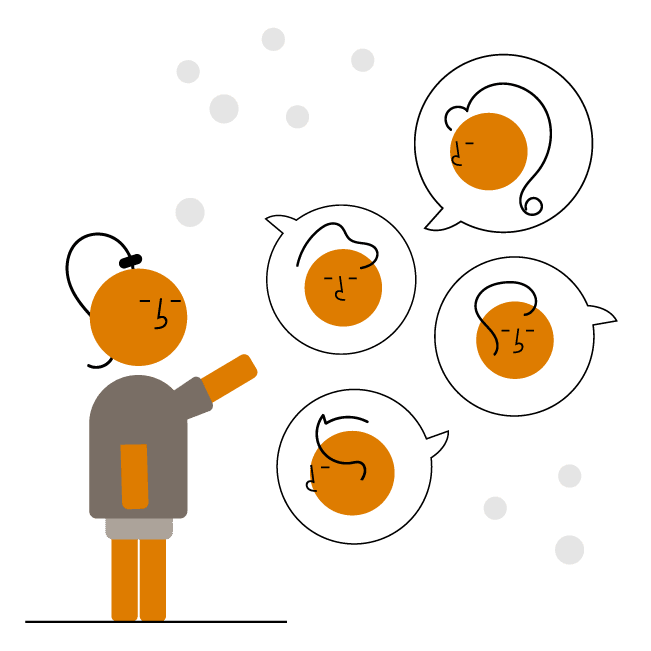
One of the core beliefs of the MDI is that children’s voices deserve to be heard. Asking children for their input is valuable because it provides us with rich data on child well-being that we could not otherwise access — MDI data can be used to create environments and interactions which help children thrive.
The MDI is also a powerful tool because it tells children their thoughts and feelings are valued and grants them a say in how their schools and communities make changes to support them. The MDI is aligned with Article 12 of the United Nations Convention on the Rights of the Child that states ‘‘children are full-fledged persons who have the right to express their views in all matters affecting them and requires that those views be heard and given due weight in accordance with the child’s age and maturity.”
Research on the MDI has found that responses from children in Grade 4 and above are as reliable and valid. A number of studies have been conducted to test the validity of the MDI survey, including two initial pilots in 2008, and two district-wide pilots in both urban and rural communities in 2009 and 2010. Results from these studies showed the MDI to have both strong reliability and validity. Data checks are repeated every year to ensure the data collected each year meets rigorous research standards. You can read more about the MDI pilot studies and learn more about other research on the MDI and using the MDI data here.
If you are having a hard time finding your reports or you have questions on the reports themselves.
Please don’t hesitate to contact us.
A field guide to well-being in the middle years
A powerful tool to understand and support children’s well-being and positive development in the middle years

Faculty of Medicine
School of Population & Public Health
© 2009 – 2025 Human Early Learning Partnership